Psychological pricing Pricing isn’t just about numbers—it’s about human behavior. The most successful businesses don’t simply calculate costs and add a markup. They use psychological insights that influence how customers feel about a price, how they perceive value, and what makes them say “yes, this is worth it.”
In this article, we’ll break down the most effective pricing psychology strategies that smart businesses use to boost profit without sacrificing trust.
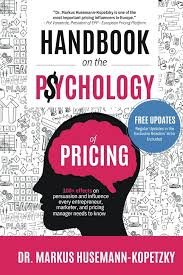
Table of Contents
1. The Power of Anchoring: Your First Price Sets the Tone
Anchoring means that the first price a customer sees becomes the reference point for all other prices. Even when people know it’s arbitrary, the anchor still influences them.
How businesses use this:
- Showing a “regular price” next to a “sale price.”
- Listing a premium option first so everything else feels more affordable.
- Using comparison charts (common in SaaS) to make mid-tier plans look like the best deal.
Why it works:
Once people see the highest price, everything else feels inexpensive in comparison—raising the likelihood they choose a more profitable mid-tier option.
2. The Decoy Effect: Guiding Customers Toward the Ideal Choice
The decoy effect occurs when adding a third, less attractive option pushes customers toward the choice the business actually wants them to pick.
Example:
- Coffee: Small $3, Medium $4, Large $4.20
The medium exists mainly to make the large feel like a bargain.
Why it works:
People tend to choose the option that feels like it provides the most value—not necessarily the cheapest.
3. Charm Pricing: Why $9.99 Still Outsells $10
Charm pricing is the classic ending a price in .99 trick—and it still works in 2025.
Because:
- The brain reads numbers from left to right.
- $9.99 is processed closer to $9 than $10.
- That one-cent difference creates a perceived drop in cost.
Use it for mass-market goods, but high-end products often perform better with rounded pricing (e.g., $200 instead of $199) because it feels more premium.
4. The Price–Quality Illusion
Psychology of Pricing Consumers often assume price reflects quality—especially when they don’t understand the product deeply.
Luxury brands thrive on this.
Higher prices signal exclusivity, durability, and craftsmanship—even if the cost difference is minimal.
Smart businesses use:
- Premium pricing to elevate the brand
- Tiered pricing to capture different customer segments
- High-ticket offers with strong value narratives
5. Bundle Pricing: More Value, Higher Revenue
Bundling works because people love the feeling of getting more for their money.
Examples:
- Software offering “suite” packages
- Restaurants offering combo meals
- E-commerce sellers offering product kits
Benefits:
- Increases average order value (AOV)
- Reduces decision fatigue
- Makes individual prices seem like a bargain
6. Loss Aversion: People Hate Losing More Than They Love Winning
Behavioral economics shows that people feel the pain of losing twice as strongly as the pleasure of gaining.
Businesses leverage loss aversion through:
- Limited-time discounts (“Sale ends at midnight”)
- Limited stock (“Only 2 left!”)
- Guarantees (“Try risk-free for 30 days”)
These tactics motivate customers to act quickly because waiting feels like a loss.
7. Price Framing: It’s All in How You Present It
How you present a price can be just as important as the price itself.
Examples:
- “Only $1/day” instead of “$30/month.”
- “Save $200 annually” instead of “$16.67 per month.”
- “Get 3 months free” instead of “25% off.”
Framing interactions:
- Smaller units feel more affordable.
- Monthly feels easier than annual (even if the annual is the better deal).
- Savings feel more powerful when expressed in absolute numbers.
8. Social Proof Pricing: Value Confirmed by Others
Customers rely on others to validate their buying decisions—especially for unfamiliar products.
Smart pricing strategies include:
- Showing “most popular” badges
- Highlighting customer reviews next to price
- Displaying how many people bought the product recently
It reassures buyers that the price is justified and the product is trustworthy.
9. Dynamic Pricing: Real-Time Optimization
With data-driven tools, businesses now adjust prices based on demand, time, customer behavior, and inventory.
Common in:
- Airlines
- Ride-sharing apps
- E-commerce platforms
- Hotels
- SaaS with usage-based billing
The key is transparency—customers accept dynamic pricing when it feels fair and predictable.
10. Value-Based Pricing: The Smartest Approach of All
Psychology of Pricing most profitable businesses don’t price based on cost—they price based on perceived value.
Ask:
- How much is this worth to the customer’s life or business?
- What problem does it solve?
- What is the ROI?
When value is clear, price becomes a secondary question.
This is how:
- Consultants charge $5,000+ per project
- Software companies sell $200/month subscriptions
- Brands build loyal customer bases willing to pay premium prices